Chopta in Winter 2026–27: Snowfall, Tungnath Closing & Snow Trek Guide
In summer, Chopta is a meadow village surrounded by rhododendron forest. In winter it becomes one of the best snow destinations in Uttarakhand: white meadows, frozen trails and the whole Chaukhamba–Kedarnath range glowing at sunrise. This guide covers Chopta in winter: when it snows, what happens to the Tungnath temple, road conditions, the snow trek to Tungnath and Chandrashila, where to stay and how to stay safe.
Chopta in winter at a glance: Altitude 2,680 m · First snow late Nov–Dec · Heaviest snow Jan–Feb · January nights around -10°C · Tungnath temple closed in winter · Road may stop short of Chopta after heavy snow · Chopta weather now
When Does It Snow in Chopta?
| Month | Snow | Typical temperature | What to expect |
|---|---|---|---|
| November | Occasional, late in the month | -3 to 8°C | Clear views, frosty mornings, Tungnath closes |
| December | Likely, especially after mid-month | -7 to 4°C | Snow season begins |
| January | Heaviest and most reliable | -10 to 2°C | Deep snow, road often blocked near Chopta |
| February | Deep snow on the ground, fresh spells | -7 to 5°C | Excellent snow trekking, longer days |
| March | Melting lower down | -3 to 9°C | Snow up high, rhododendrons start to bloom |
Snow comes in spells brought by western disturbances, so even in January you may arrive to bright sunshine with snow from earlier spells still on the ground. For the wider picture, see our Uttarakhand snowfall calendar.
Tungnath Temple in Winter
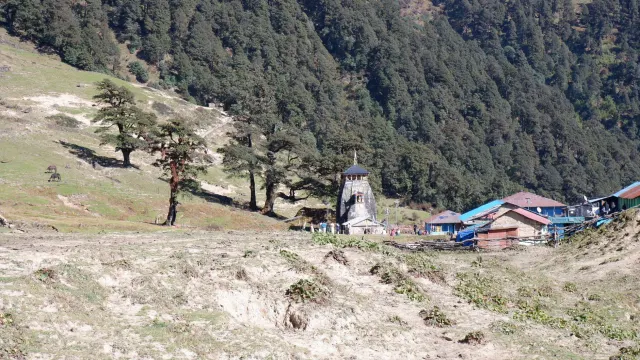
The Tungnath temple, the highest of the Panch Kedar shrines, closes for winter around Diwali, usually in early November. The deity is then worshipped at the Markandeya temple in Makkumath, lower in the valley, until the doors reopen in spring. You can still trek up towards Tungnath in winter when the trail is safe, and many people do it for the snow and the views, but the temple itself is closed.
Getting to Chopta in Winter
Chopta is about 450 km from Delhi. The usual route is Rishikesh, Devprayag, Srinagar and Rudraprayag to Ukhimath, then 30 km up to Chopta. You can also approach from Gopeshwar on the Badrinath side.
- After fresh snow, vehicles are often stopped at Duggalbitta or Baniyakund, a few kilometres before Chopta. You then walk the last stretch on snow.
- Hire a local driver with snow chains for the Ukhimath–Chopta stretch in January and February.
- Drive in daylight. Shaded bends turn to black ice after sunset.
- Check conditions on our snowfall today page before setting out.
The Snow Trek to Tungnath and Chandrashila
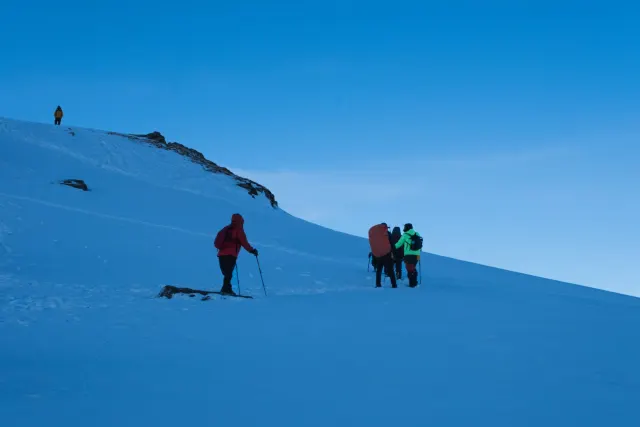
The route is the same as in summer: about 3.5 km from Chopta to Tungnath, then about 1.5 km more to the Chandrashila summit at around 4,000 m. In winter, though, it is a different trek:
- Snow and ice cover the stone path. Microspikes or crampons and gaiters make a huge difference.
- Short days: start early and turn back by early afternoon, whatever the progress.
- A local guide is strongly recommended after heavy snowfall, when the trail can be buried and hard to follow.
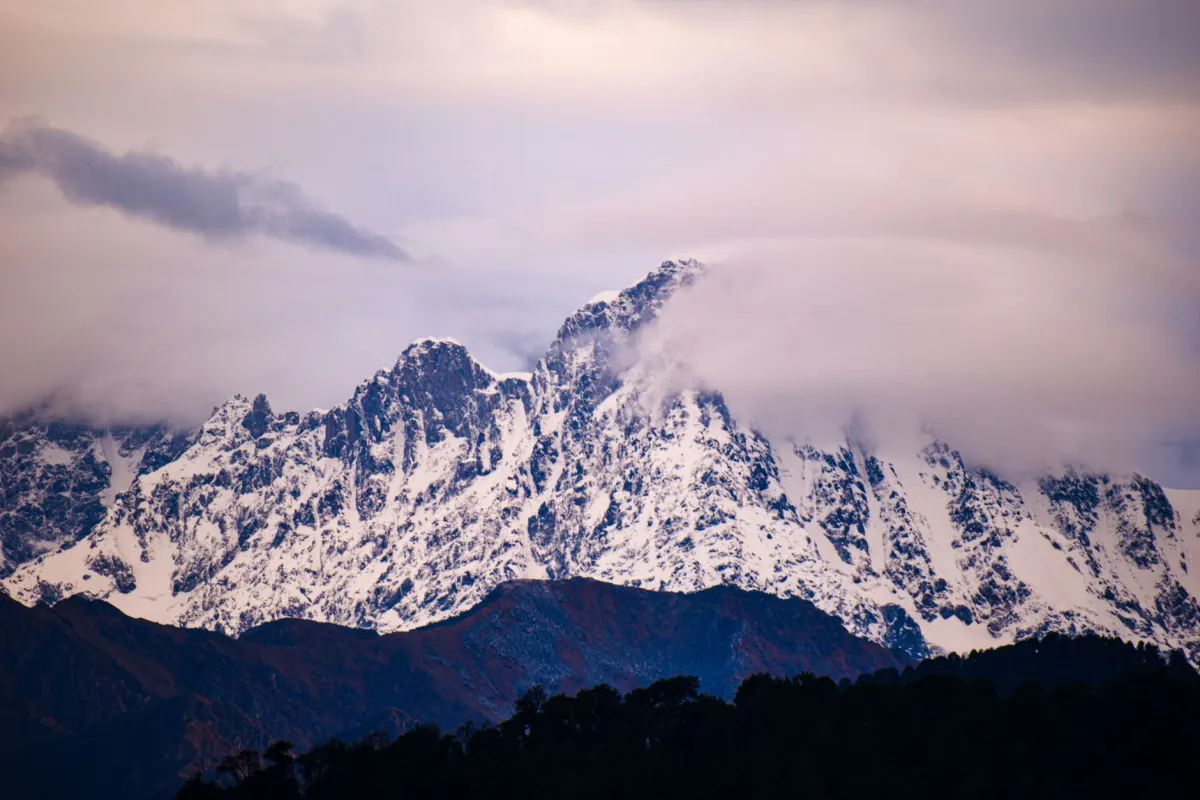
- The reward: a sunrise view over Chaukhamba, Kedarnath, Trishul and Nanda Devi under snow, one of the finest winter views in the Indian Himalaya.
For the full summer route, distances and difficulty, see our Chopta Tungnath trek guide and the Chandrashila trek page.
Deoria Tal in Winter
Near Chopta, the Deoria Tal trek starts from Sari village and climbs about 2.5 km to a lake that mirrors the Chaukhamba peaks. In winter the trail and the lake shore are often snowy, and the lake can freeze at the edges. It is an easier option if Chandrashila is too ambitious, and the two are often combined in one trip.
Where to Stay
Winter stays around Chopta are simple: guesthouses, huts and camps with limited electricity and basic heating. Many places close in the deepest snow, and rules on camping in the meadows have changed in recent years, so book with a licensed operator or guesthouse and confirm they are open before you travel. Ukhimath, Duggalbitta and Sari village offer more options and are easier to reach in heavy snow.
4-Day Chopta Winter Itinerary
- Day 1: Rishikesh to Ukhimath (about 180 km, 7–8 hours). Visit the Omkareshwar temple, the winter seat of Kedarnath.
- Day 2: Drive to Sari, trek to Deoria Tal, then continue to Chopta or Duggalbitta.
- Day 3: Pre-dawn start for the snow trek to Tungnath and Chandrashila, return to Chopta.
- Day 4: Drive back to Rishikesh. Keep a buffer day for road closures.
What to Pack
- Thermals, a fleece, a down jacket and a waterproof shell
- Waterproof trekking boots, gaiters and microspikes (often available on rent locally)
- Waterproof gloves, a woollen cap, a neck warmer and two pairs of thick socks
- Sunglasses and sunscreen: snow glare is intense
- A headlamp, power bank, water bottle and basic medicines
- Cash: ATMs and card payments are rare beyond Ukhimath
Safety Tips
- Do not trek alone after fresh snowfall. Trails disappear and weather turns quickly.
- Watch for signs of altitude sickness: headache, nausea, breathlessness. Descend if they get worse.
- Never use charcoal or gas heaters in a closed room.
- Tell your guesthouse your plan and expected return time.
Frequently Asked Questions
Does it snow in Chopta?
Yes. Chopta usually gets its first snow between late November and December, and January and February bring the heaviest snow. It is one of the most reliable snow destinations in Uttarakhand that you can reach by road.
Is Tungnath temple open in winter?
No. The Tungnath temple doors close for winter around Diwali, usually in early November, and the deity is worshipped at the Markandeya temple in Makkumath until the doors reopen in spring. You can still trek towards Tungnath in winter when conditions allow, but the temple itself is closed.
Can I trek to Chandrashila in winter?
Often, yes, but only with the right gear and preferably a local guide. Deep snow, ice and short days make the climb much harder than in autumn, and the trail can be closed after heavy snowfall.
Is the road to Chopta open in winter?
Usually up to a point. After heavy snow, vehicles often have to stop at Duggalbitta or Baniyakund, a few kilometres before Chopta, and visitors walk the rest. The road reopens once it is cleared.
What is the temperature in Chopta in January?
Roughly -10°C at night to about 2°C in the day. Check our live Chopta weather page for the current temperature.
Is Chopta good for a December trip?
Yes, especially in the second half of December when snow is more likely. Pack for sub-zero nights and keep a buffer day in case snow blocks the road.
More Winter Guides
Compare Chopta with other snow destinations in our Uttarakhand snowfall places guide, or see Auli snowfall if you want skiing. Prefer a multi-day snow trek? Read our Kedarkantha trek guide. Month-wise planning: December and January. Or let the AI Trip Planner build your Chopta trip.